- 相关推荐
春节英语手抄报资料:春节英文介绍
在平平淡淡的日常中,大家都看到过自己喜欢的手抄报吧,手抄报版面编排和美化设计也要围绕着主题,根据主题和文章内容决定形式的严肃与活泼,做到形式与内容的统一。那什么样的手抄报才是好的呢?下面的精彩内容是小编帮大家整理的春节英语手抄报资料:春节英文介绍,仅供参考,欢迎大家阅读。
waking up on new year, everybody dresses up. first they extend greetings to their parents. then each child will get money as a new year gift, wrapped up in red paper. people in northern china will eat jiaozi, or dumplings, for breakfast, as they think “jiaozi” in sound means “bidding farewell to the old and ushering in the new”. also, the shape of the dumpling is like gold ingot from ancient china. so people eat them and wish for money and treasure.
southern chinese eat niangao (new year cake made of glutinous rice flour) on this occasion, because as a homophone, niangao means “higher and higher, one year after another.” the first five days after the spring festival are a good time for relatives, friends, and classmates as well as colleagues to exchange greetings, gifts and chat leisurely.
burning fireworks was once the most typical custom on the spring festival. people thought the spluttering sound could help drive away evil spirits. however, such an activity was completely or partially forbidden in big cities once the government took security, noise and pollution factors into consideration. as a replacement, some buy tapes with firecracker sounds to listen to, some break little balloons to get the sound too, while others buy firecracker handicrafts to hang in the living room.
the lively atmosphere not only fills every household, but permeates to streets and lanes. a series of activities such as lion dancing, dragon lantern dancing, lantern festivals and temple fairs will be held for days. the spring festival then comes to an end when the lantern festival is finished.
china has 56 ethnic groups. minorities celebrate their spring festival almost the same day as the han people, and they have different customs.
Origin of the Spring Festival
春节起源英文介绍
The Spring Festival is the lunar Suishou,it is also our ancient traditional festivals. Ancient-off "year" is not in the twelfth lunar month on the 29th or on the 30th, but in the "wax on", that later, "Laba." Southern and Northern Dynasties later, the "wax Festival" to theendof the year. To the Republican era, the switch to Gregorian calendar was only then that the lunar year is called "Spring Festival", because the Spring Festival is generally in the "Spring," both before and after.
翻译:春节,是农历的岁首,也是我国古老的传统节日。古代过“年”不是在腊月二十九日或三十日,而是在“蜡日”,即后来的“腊八”。南北朝以后,把“蜡祭”移至岁末。到了民国时 ,改用阳历,才把阴历年叫“春节”,因为春节一般都在“立春”前后。
The Spring Festival is Chinas biggest and most exciting festival of an ancient tradition. Commonly known as "Chinese New Year." According to Chinas Lunar New Year, the first month who started in ancient times known Mongol Yuan Chen, Yuan-cheng, Yuan Shuo, New Years Day and so on, commonly known as New Years Day, as well as the previous day, moving in, three new moon, three North Korea, the three began, ternary, etc. Do not say, which means the first month who started this is the year, month, day three start.
翻译:春节是我国最盛大、最热闹的一个古老传统节日。俗称“过年”。按照我国农历,正月初一古称元日、元辰、元正、元朔、元旦等,俗称年初一,还有上日、正朝、三朔、三朝、三始、三元等别称,意即正月初一是年、月、日三者的开始。
Chinese the New Year, by definition is a spring festival. Spring, Vientiane update, a new round of sowing and harvesting season is beginning. People have every reason to dancing and singing towelcome the holiday. Thus, before the Spring Festival red paper pasted on the door face, yellow-word New Years Message.
翻译:春节,顾名思义就是春天的节日。春天来临,万象更新,新一轮播种和收获季节又要开始。 人们有足够的理由载歌载舞来迎接这个节日。于是,节前就在门脸上贴上红纸黄字的新年寄语。
Theanother nameis called the Spring Festival Chinese New Year. "Year" what is it? Is a kind of bad luck for peoples imagination in animals. "Year" the one. Trees pride had Baicao no life; "year" one "off" and, all things grow, flowers everywhere. "Year" How can the past? You need to use whip shelled, so have the custom of burning firecrackers. In 1993, the Beijing Municipal Peoples Government promulgated a law to ban fireworks, so that this continuity throughout the ages for centuries the custom of the past.
翻译:春节的另一名称叫过年。“年”是什么呢?是一种为人们带来坏运气的想象中的动物。“年”一来。树木凋蔽,百草不生;“年”一“过”,万物生长,鲜花遍地。 “年”如何才能过去呢?需用鞭炮轰 ,于是有了燃鞭炮的习俗。1993年,北京市人民政府颁布了禁放烟花爆竹的法律,使这一沿续了几百年的习俗成为历史。
The Spring Festival is a family reunion holiday, which is very similar to the Christmas in the West. Awayfromhome when the children returned to their parents at home to travel long distances. Real the night before Chinese New Year is called "New Years Eve", also known as "Reunion Night", "group years." From the traditional New Years Eve celebrations continued until the fifteenth day Lantern Festival. Festive atmosphere, to last a month. Holiday movies before Jizao, worship of ancestors, to eliminate contamination. To be posted on the 30th Door God, couplets, flag, eating dumplings, fireworks, New Years Eve, "Shou Sui" and other ceremonies; younger generation who started their elders to pay the first month, and then to the New Year with relatives and friends. When he met friends and relatives for the first time,
Say, "congratulated the new hi", "Kung Hei Fat Choi", "Congratulations," "Happy New Year" and then congratulated each other.
翻译:春节是个亲人团聚的节日,这一点和西方的圣诞节很相似。离家的孩子这时要不远千里回到父母家里。真正过年的前一夜叫“除夕”,又叫“团圆夜”,“团年”。 传统的庆祝活动则从除夕一直持续到正月十五元宵节。喜庆气氛要持续一个月。 正月初一前有祭灶、祭祖、 扫除污秽。三十日要贴门神、对联、挂旗、吃饺子、放鞭炮,除夕“守岁”等 仪 式;正月初一晚辈向长辈拜年,然后至亲友家贺年。亲友第一次见面时,说些“恭贺新喜”、“恭喜发财”、“恭喜”、“过年好”等话,互相祝贺。
December 23, 1949, the PRC Central Peoples Government provides for an annual Lunar New Year holiday 3 days. Chinese New Year - China the public is most solemn, the most lively of an ancient traditional festivals.
翻译:1949年12月23日,中华人民共和国中央人民政府规定每年春节放假3天。春节——我国民间最隆重、最热闹的一个古老传统节日。
春节压岁钱的英文由来
Lucky money
春节拜年时,长辈要将事先准备好的压岁钱分给晚辈,据说压岁钱可以压住邪祟,因为“岁”与“祟”谐音,晚辈得到压岁钱就可以平平安安度过一岁。
Happy the New Year Spring Festival, the elders will prepared New Years money to the younger generation, it is said that the New Years money can be pinned XieSui, because "old" and "are" harmonics, junior get lucky money can be spent a year in peace.
压岁钱有两种,一种是以彩绳穿线编作龙形,置于床脚;
The New Years money has two, one is the color rope threading loin dragon, at the foot of the bed;
另一种是最常见的,即由家长用红纸包裹分给孩子的钱。
The other is themost common, the parents with red paper parcel to the childs money.
压岁钱可在晚辈拜年后当众赏给,也可在除夕夜孩子睡着时,家长愉偷地放在孩子的枕头底下。
The New Years money can be in the younger generation after new rewarded in public, also can be in the baby fell asleep on New Years eve, the parent please on the child stealing under the pillow.
民间认为分压岁钱给孩子,当“年”去伤害孩子时,孩子可以用这些钱让它化凶为吉。
Folk think points New Years money for children, when "year" to hurt the child, the child can use the money to let it change fierce for auspicious.
压岁钱牵系着一颗颗童心,而孩子的压岁钱主要用来买鞭炮、玩具和糖果等节日所需的东西。
The New Years money is set on million child, and the childs New Years money is mainly used to buy off firecrackers, toys and sweets etc festival wants.
现在长辈为晚辈分送压岁钱的习俗仍然盛行,压岁饯的数额从几十到几百不等,这些压岁钱多被孩子们用来购买图书和学习用品,新的时尚为压岁钱赋予了新的内容。
Now for the younger generation of New Years money distributed elders custom still popular, pressurefromdozens of the amount of one years old to several hundred dollars, more than the New Years money by children used to buy books and learning supplies, the new fashion for the New Years moneyendowed with new content.
Spring Festival
The Spring Festival is the most important festival for the Chinese people and is when all family members get together, just like Christmas in the West. All people living awayfromhome go back,becoming the busiest time for transportation systems of about half a monthfromthe Spring Festival. Airports, railway stations and long-distance bus stations are crowded with home returnees.
The Spring Festival falls on the 1st day of the 1st lunar month, often one month later than the Gregorian calendar. It originated in the Shang Dynasty (c. 1600 BC-c. 1100 BC)fromthe peoples sacrifice to gods and ancestors at theendof an old year and the beginning of a new one.
Strictly speaking, the Spring Festival starts every year in the early days of the 12th lunar month and will last till the mid 1st lunar month of the next year. Of them, the most important days are Spring Festival Eve and the first three days. The Chinese government now stipulates people have seven days off for the Chinese Lunar New Year.
Many customsaccompany the Spring Festival. Some are still followed today, but others have weakened.
On the 8th day of the 12th lunar month, many families make laba porridge, a delicious kind of porridge made with glutinous rice, millet, seeds of Jobs tears, jujube berries, lotus seeds, beans, longan and gingko.
The 23rd day of the 12th lunar month is called Preliminary Eve. At this time, people offer sacrifice to the kitchen god. Now however, most families make delicious food to enjoy themselves.
After the Preliminary Eve, people begin preparing forthe coming New Year. This is called "Seeing the New Year in".
Store owners are busy then as everybody goes out to purchase necessities for the New Year. Materials not only include edible oil, rice, flour, chicken, duck, fish and meat, but also fruit, candies and kinds of nuts. Whats more, various decorations, new clothes and shoes for the children as well as gifts for the elderly, friends and relatives, are all on the list of purchasing.
Before the New Year comes, thepeople completely clean the indoors and outdoors of their homes as well as their clothes, bedclothes and all their utensils.
Then people begin decorating their clean rooms featuring an atmosphere of rejoicing and festivity. All the door panels will be pasted with Spring Festival couplets, highlighting Chinese calligraphy with black characters on red paper. The content variesfromhouse owners wishes for a bright future to good luck for the New Year. Also, pictures of the god of doors and wealth will be posted on front doors to ward off evil spirits andwelcome peace and abundance.
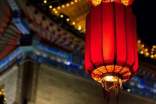
The Chinese character "fu" (meaning blessing or happiness) is a must. The character put on paper can be pasted normally or upside down, for in Chinese the "reversed fu" is homophonic with "fu comes", both being pronounced as "fudaole." Whats more, two big red lanterns can be raised on both sides of the front door. Red paper-cuttings can be seen on window glass and brightly colored New Year paintings with auspicious meanings may be put on the wall.
People attach great importance to Spring Festival Eve. At that time, all family members eat dinner together. The meal is more luxurious than usual. Dishes such as chicken, fish and bean curd cannot be excluded, for in Chinese, their pronunciations, respectively "ji", "yu" and "doufu," mean auspiciousness, abundance and richness. After the dinner, the whole family will sit together, chatting and watching TV. In recent years, the Spring Festival party broadcast on China Central Television Station (CCTV) is essential entertainment for the Chinese both at home and abroad. According to custom, each family will stay up to see the New Year in.
Waking up on New Year, everybody dresses up. First they extendgreetings to their parents. Then each child will get money as a New Year gift, wrapped up in red paper. People in northern China will eat jiaozi, or dumplings, for breakfast, as they think "jiaozi" in sound means "bidding farewell to the old and ushering in the new". Also, the shape of the dumpling is like gold ingotfromancient China. So people eat them and wish for money and treasure.
Southern Chinese eat niangao (New Year cake made of glutinous rice flour) on this occasion, because as a homophone, niangao means "higher and higher, one year after another." The first five days after the Spring Festival are a good time for relatives, friends, and classmates as well as colleagues to exchange greetings, gifts and chat leisurely.
Burning fireworks was once the most typical custom on the Spring Festival. People thought the spluttering sound could help drive away evil spirits. However, such an activitywas completely or partially forbidden in big cities once the government took security, noise and pollution factors into consideration. As a replacement, some buy tapes with firecracker sounds to listen to, some break little balloons to get the sound too, while others buy firecracker handicrafts to hang in the living room.
The lively atmosphere not only fills every household, but permeates to streets and lanes. A series of activities such as lion dancing, dragon lantern dancing, lantern festivals and temple fairs will be held for days. The Spring Festivalthen comes to anendwhen the Lantern Festival is finished.
China has 56 ethnic groups. Minorities celebrate their Spring Festival almost the same day as the Han people, and they have different customs.
春节介绍中文翻译:
春节,是农历正月初一,又叫阴历年,俗称“过年”。这是我国民间最隆重、最热闹一个传统节日。春节历史很悠久,它起源于殷商时期年头岁尾祭神祭祖活动。按照我国农历,正月初一古称元日、元辰、元正、元朔、元旦等,俗称年初一,到了民国时期,改用公历,公历一月一日称为元旦,把农历一月一日叫春节。
春节到了,意味着春天将要来临,万象复苏草木更新,新一轮播种和收获季节又要开始。人们刚刚度过冰天雪地草木凋零漫漫寒冬,早就盼望着春暖花开日子,当新春到来之际,自然要充满喜悦载歌载舞地迎接这个节日。千百年来,人们使年俗庆祝活动变得异常丰富多彩,每年从农历腊月二十三日起到年三十,民间把这段时间叫做“迎春日”,也叫“扫尘日”,在春节前扫尘搞卫生,是我国人民素有传统习惯。
然后就是家家户户准备年货,节前十天左右,人们就开始忙于采购物品,年货包括鸡鸭鱼肉、茶酒油酱、南北炒货、糖饵果品,都要采买充足,还要准备一些过年时走亲访友时赠送礼品,小孩子要添置新衣新帽,准备过年时穿。
在节前要在住宅大门上粘贴红纸黄字新年寄语,也就是用红纸写成春联。屋里张贴色彩鲜艳寓意吉祥年画,心灵手巧姑娘们剪出美丽窗花贴在窗户上,门前挂大红灯笼或贴福字及财神、门神像等,福字还可以倒贴,路人一念福倒了,也就是福气到了,所有这些活动都是要为节日增添足够喜庆气氛。
春节另一名称叫过年。在过去传说中,年是一种为人们带来坏运气想象中动物。年一来。树木凋蔽,百草不生;年一过,万物生长,鲜花遍地。年如何才能过去呢?需用鞭炮轰,于是有了燃鞭炮习俗,这其实也是烘托热闹场面又一种方式。
春节是个欢乐祥和节日,也是亲人团聚日子,离家在外孩子在过春节时都要回家欢聚。过年前一夜,就是旧年腊月三十夜,也叫除夕,又叫团圆夜,在这新旧交替时候,守岁是最重要年俗活动之一,除夕晚上,全家老小都一起熬年守岁,欢聚酣饮,共享天伦之乐,北方地区在除夕有吃饺子习俗,饺子作法是先和面,和字就是合;饺子饺和交谐音,合和交有相聚之意,又取更岁交子之意。在南方有过年吃年糕习惯,甜甜粘粘年糕,象征新一年生活甜蜜蜜,步步高。待第一声鸡啼响起,或是新年钟声敲过,街上鞭炮齐鸣,响声此起彼伏,家家喜气洋洋,新一年开始了,男女老少都穿着节日盛装,先给家族中长者拜年祝寿,节中还有给儿童压岁钱,吃团年饭,初二、三就开始走亲戚看朋友,相互拜年,道贺祝福,说些恭贺新喜、恭喜发财、恭喜、过年好等话,祭祖等活动。
节日热烈气氛不仅洋溢在各家各户,也充满各地大街小巷,一些地方街市上还有舞狮子,耍龙灯,演社火,游花市,逛庙会等习俗。这期间花灯满城,游人满街,热闹非凡,盛况空前,直要闹到正月十五元宵节过后,春节才算真正结束了。
春节是汉族最重要节日,但是满、蒙古,瑶、壮、白、高山、赫哲、哈尼、达斡尔、侗、黎等十几个少数民族也有过春节习俗,只是过节形式更有自己民族特色,更蕴味无穷。
【春节英语手抄报资料:春节英文介绍】相关文章:
春节手抄报的英文资料03-13
英语春节手抄报资料08-18
初一春节英语手抄报资料10-17
春节手抄报资料09-12
春节手抄报资料08-31
春节手抄报资料精选08-15
春节手抄报资料08-17
春节的手抄报资料08-25
春节手抄报资料:春节祭灶10-03